IN SILICO
Computation alone
- ×Different targets and datasets
- ×Inconsistent evaluation conditions
- ×High scores do not prove binding
- ×Negative results rarely surface

01 / THE LAB
Follow a researcher beyond the screen, into the extraordinary world of proteins.
Explore the challengePreparing your journey…
WHY POREVA OPEN
Teams use different targets, datasets and evaluation methods. A design that scores well in silico may still fail to express, remain stable, bind selectively or produce the intended biological function.
THE RULES OF TRUST
Core rules are published and frozen before submission so different models and methods can be tested under conditions designed for direct comparison.
Tasks, protocols and the scoring framework are released before submissions open.
FROZEN RULESSelected designs move through the same standardized experimental workflow.
UNIFIED PROTOCOLDesign identity and lab execution are separated to reduce human influence.
DOUBLE-BLINDSuccessful and failed outcomes are organized for release where IP and compliance allow.
OPEN RESULTSFROM DESIGN TO EVIDENCE
Models can generate candidates quickly. Poreva Open moves those digital designs through one traceable experimental pipeline, producing evidence at every stage.
Generate candidate sequences with any model or technical approach.
SEQUENCE / STRUCTURESubmit sequences with reproducible method metadata — model version, seeds, templates — sealed at the deadline.
SEALED · SHA-256 + UTCRun scaled expression, purification and binding assays under one protocol.
EXPRESSION / BINDINGTop designs enter cellular, physicochemical and organoid evaluation.
FUNCTION / DEVELOPABILITYPublish comparable results and release positive and negative evidence over time.
OPEN BENCHMARKConceptual workflow · not live experimental data
MULTI-LAYER EVALUATION
The first edition evaluates representative experimental dimensions across the protein design process, measuring generalization, success rate and R&D efficiency of complete design systems.
Expression level, yield and fundamental quality.
Affinity, kinetics and dose response.
Selectivity, off-target and cross-reactivity.
Functional activity and mechanism in cellular systems.
Stability, solubility and related properties.
Manufacturing, development and translation potential.
COMPETITION 2026
Research groups, AI teams, biotechnology companies, academic labs and independent researchers can participate. No model or technical pathway is prescribed.
Challenges will be grounded in real drug discovery needs. Targets, inputs, protocols and the evaluation framework will be published before submissions. Hidden targets and blind tasks will follow in future editions.
COMPETITION TIMELINE
Except for the planned November 2026 opening, exact dates will be added after the core rules are finalized.
Publish the target, submission requirements, protocols and evaluation framework.
Accept protein designs from teams and researchers worldwide.
Megalaxy Lab performs standardized double-blind validation.
Top designs move into cellular and advanced biological models.
Publish results and progressively release complete experimental data.
WHERE VALIDATION HAPPENS
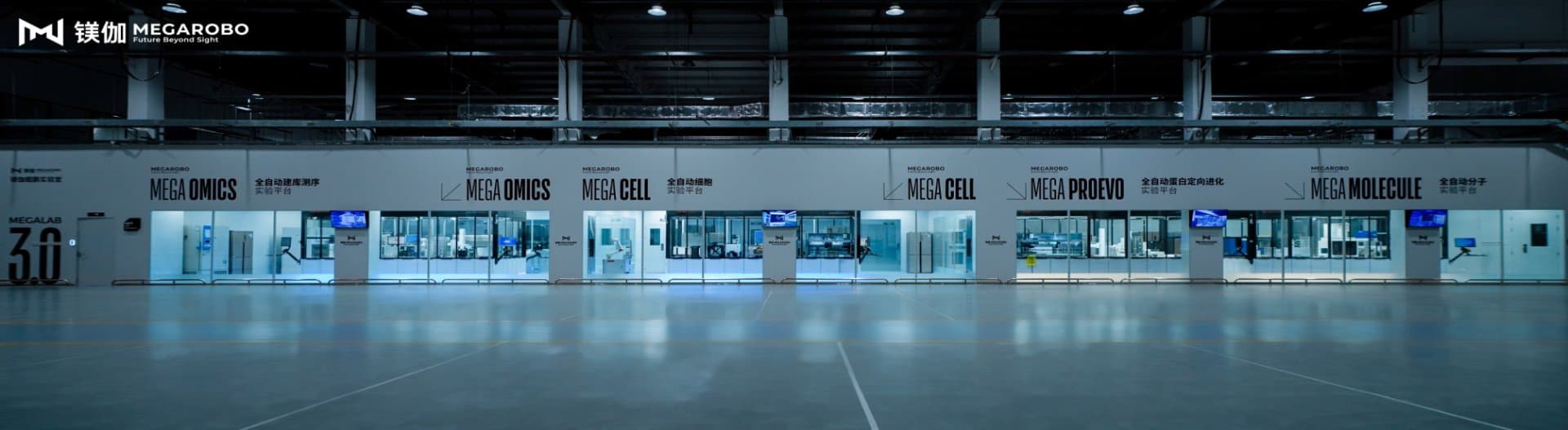
All experimental validation is planned for Megalaxy Lab, with scaled protein expression, purification, binding assays, cellular function and organoid capabilities under end-to-end sample and data traceability.
BE THE FIRST TO KNOW
Registration, the first target, rules and exact dates will be released through Megarobo's official channels.
Read the competition announcementPoreva Open · Let protein design speak through real experiments.